The Genies by Victor Hugo
prose translation by Marva Barnett, with stanzas numbered
Walls, town, and port, harbor of death. A grey sea where the breeze breaks; everything sleeps.
On the plains, a noise is born. It’s the breath of night. It moans like a soul a flame always follows.
The loudest voice resembles a little spherical bell. It’s the gallop of a jumping dwarf. It flees, rushes forward, then in cadence dances on one foot at the end of a wave.
The rumor approaches. The echo repeats it. It’s like the steeple bell of a cursed convent; like the noise of a crowd that thunders and rolls and sometimes collapses and sometimes grows.
God! the sepulchral voice of the Genies! What noise they make! Let’s flee under the spiral of the deep staircase. Already my lamp goes out, and the shadow of the banister that creeps up the wall climbs all the way to the ceiling.
The Genie swarm is passing in a whistling whirlwind! The yews, smashed by their flight, crack like a burning pine. Their heavy, rapid troop, flying in the empty space, seems to be a livid cloud that carries lightening in its side.
They’re really near! Let’s keep this room closed, here where we deride them. What a noise outside! Hideous army of vampire and dragons! The detached roof beam is bending like a damp piece of grass, and the old rusty door is trembling off its hinges!
Cries of hell! Voices that shriek and lament! The horrible swarm, pushed by the north wind, without a doubt, oh heavens! is swooping down on my house. The wall yields before the black battalion. The leaning house screams and totters; and one would say that the wind tears the house from the ground, rolling it with their whirlwind, as it might chase a dry leaf!
Prophet! If your hand saves me from these impure demons of the nights, I will prostrate myself before your sacred censers/altars. Let it be that, before these faithful doors, their breath dies in sparks, and that in vain the claws of their wings scratch and screech at these dark windows!
They’ve gone! Their cohort flies away, flees; and their feet have stopped beating on my door with multiple blows. The air is full of the noise of chains; and in the nearby forest all the great oaks quiver, folded beneath their flight of fire!
The beating of their distant wings diminishes: so confused in the plains, so feeble that one seems to hear the locust cry in a frail voice, or hail crackle on an old lead roof.
Strange syllables still come to us; thus does an Arab chant rise up on the beach when the horn is sounded; and the child who dreams dreams golden dreams.
The baneful Genies, sons of death, hurry on into the shadows; their swarm growls: thus profoundly murmurs a wave one doesn’t see.
This vague noise that subsides in sleep is the wave on the shore; it’s the moaning, almost faded away, of a saint for someone dead.
We doubt the night… I listen—everything flees, everything passes away, space erases the noise.
by Victor Hugo
Poem XVIII in Les Orientales (1828)
Murs, ville,
Et port,
Asile
De mort,
Mer grise
Où brise
La brise,
Tout dort.
Dans la plaine
Naît un bruit.
C’est l’haleine
De la nuit.
Elle brame
Comme une âme
Qu’une flamme
Toujours suit !
La voix plus haute
Semble un grelot.
D’un nain qui saute
C’est le galop.
Il fuit, s’élance,
Puis en cadence
Sur un pied danse
Au bout d’un flot.
La rumeur approche.
L’écho la redit.
C’est comme la cloche
D’un couvent maudit ;
Comme un bruit de foule,
Qui tonne et qui roule,
Et tantôt s’écroule,
Et tantôt grandit,
Dieu ! la voix sépulcrale
Des Djinns !… Quel bruit ils font !
Fuyons sous la spirale
De l’escalier profond.
Déjà s’éteint ma lampe,
Et l’ombre de la rampe,
Qui le long du mur rampe,
Monte jusqu’au plafond.
C’est l’essaim des Djinns qui passe,
Et tourbillonne en sifflant !
Les ifs, que leur vol fracasse,
Craquent comme un pin brûlant.
Leur troupeau, lourd et rapide,
Volant dans l’espace vide,
Semble un nuage livide
Qui porte un éclair au flanc.
Ils sont tout près ! – Tenons fermée
Cette salle, où nous les narguons.
Quel bruit dehors ! Hideuse armée
De vampires et de dragons !
La poutre du toit descellée
Ploie ainsi qu’une herbe mouillée,
Et la vieille porte rouillée
Tremble, à déraciner ses gonds !
Cris de l’enfer! voix qui hurle et qui pleure !
L’horrible essaim, poussé par l’aquilon,
Sans doute, ô ciel ! s’abat sur ma demeure.
Le mur fléchit sous le noir bataillon.
La maison crie et chancelle penchée,
Et l’on dirait que, du sol arrachée,
Ainsi qu’il chasse une feuille séchée,
Le vent la roule avec leur tourbillon !
Prophète ! si ta main me sauve
De ces impurs démons des soirs,
J’irai prosterner mon front chauve
Devant tes sacrés encensoirs !
Fais que sur ces portes fidèles
Meure leur souffle d’étincelles,
Et qu’en vain l’ongle de leurs ailes
Grince et crie à ces vitraux noirs !
Ils sont passés ! – Leur cohorte
S’envole, et fuit, et leurs pieds
Cessent de battre ma porte
De leurs coups multipliés.
L’air est plein d’un bruit de chaînes,
Et dans les forêts prochaines
Frissonnent tous les grands chênes,
Sous leur vol de feu pliés !
De leurs ailes lointaines
Le battement décroît,
Si confus dans les plaines,
Si faible, que l’on croit
Ouïr la sauterelle
Crier d’une voix grêle,
Ou pétiller la grêle
Sur le plomb d’un vieux toit.
D’étranges syllabes
Nous viennent encor ;
Ainsi, des arabes
Quand sonne le cor,
Un chant sur la grève
Par instants s’élève,
Et l’enfant qui rêve
Fait des rêves d’or.
Les Djinns funèbres,
Fils du trépas,
Dans les ténèbres
Pressent leurs pas ;
Leur essaim gronde :
Ainsi, profonde,
Murmure une onde
Qu’on ne voit pas.
Ce bruit vague
Qui s’endort,
C’est la vague
Sur le bord ;
C’est la plainte,
Presque éteinte,
D’une sainte
Pour un mort.
On doute
La nuit…
J’écoute : –
Tout fuit,
Tout passe
L’espace
Efface
Le bruit.
“Les Misérables,” that most popular of musicals, comes at last to movie theaters — and on Christmas Day! What could be better than to have this story of love, grace and redemption arrive during the season of good will and generosity?
Yet, as other “Les Mis” fans anticipate this long-awaited film, my thoughts have been with my University of Virginia students: This fall we studied the novel and musical together. Eager for the movie, many know the songs by heart.
But as my student Kelly said when we were halfway through “Les Misérables”: “Now that I’m in the know, reading the whole story, I understand and enjoy the musical so much more.” And Tim, who played Jean Valjean in his high school production, has twice said, “I wish I’d read the novel before I played Valjean. It would have meant even more to me.”
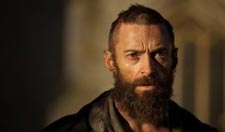
Hugh Jackman, starring as Valjean in Tom Hooper’s Universal Studios movie, did read the novel — twice — before filming. He would agree that my students are right.
The musical or movie experience is richer when one has read the novel, because the novel offers depth and complexity — particularly about the central themes of love and moral progress — that the musical on its own cannot. It’s not that the book is “better” than the musical; indeed the musical is brilliant and, despite the movie’s grim trailer, ultimately uplifting. But where the musical shows a rapid, near-miraculous transformation, the novel instead focuses on Valjean’s halting struggle toward moral redemption, in all-too-human terms.
By reading the novel, you can — as Jackman, my students and I did — experience more fully Victor Hugo’s message of love, hope and perseverance.
In the movie previews, we hear the raw despair in Jackman’s, “What have I done? Sweet Jesus, what have I done?” The movie may well bring us a “Les Mis” even more faithful to Hugo’s novel.
“Hugo’s work is unbelievable,” Jackman told me in a recent phone conversation, after we connected through mutual friends in Paris. “The first time, I read it very scientifically, really breaking everything down and writing notes. I then read it again, just before we started the film, and read it just to enjoy, really.”
Jackman reviewed relevant excerpts from the novel before each day’s scene, giving him knowledge that, he said, “really changed things on the set in many ways.” In the movie’s trailers, we see how he and other actors, such as Anne Hathaway as Fantine, translate Hugo’s realism to the screen.
In the official four-minute video on the making of the film and the power of live, on-set singing, Jackman contrasts the standard “What Have I Done?” with the way he performs the song. Bringing his understanding of the novel to the scene, he shows us Valjean’s angst when the yet-to-be hero realizes what he has done and how low he has fallen.
Still, “What Have I Done?” must sum up Valjean’s transformation in only three minutes. In the musical, it’s as though the bishop’s gift of silver candlesticks acts as a magic wand that miraculously put this hardened, hate-filled man on the right track.
Difficult choices remain relatively easy and quick, despite the anguish expressed in Valjean’s “Who Am I?” However heartfelt Jackman’s, Alfie Boe’s or Colm Wilkinson’s rendition of this self-questioning, confessional song, no lyrics can convey the moral torment that Valjean experiences in Hugo’s “Les Misérables.”
In his sweeping novel, Hugo calls Valjean’s moral progress a transfiguration — “more than a transformation.” And Valjean needs several more intensely moving experiences in order to make the grueling journey toward divinity that is transfiguration.
The generous bishop has only jostled the ex-convict’s conscience; it takes Valjean’s unthinking theft from a boy to wake it up. Realizing how morally far he has fallen, he is horrified. Only then does he dedicate his life to progressing toward God — and Hugo emphasizes how arduous and ultimately human such a struggle is.
Jackman said of Valjean, “No matter who he saves, no matter how virtuous, no matter how brave, there is still an undercurrent of shame within him and a feeling that he’s not reaching that perfection — yet he never gives up on that goal.”
Throughout the novel, we see Valjean fight to overcome serious temptations and impediments on his way to transfiguration. When an innocent stranger is arrested in his place, for example, it appears to be a godsend: He need only keep quiet to remain free, accepted by society. But Valjean’s conscience will not let him rest, as Hugo reveals in the chapter “A Storm Inside a Skull.”
When my class read about Valjean’s agonized sleepless night and long day of decision and indecision, wrestling with his conscience, my student Abby called Valjean’s feelings and thoughts a “roller coaster.” Like her, we feel both his soaring hope and anguished despair as he works to make the right decision. Hugo’s novel imbues Valjean’s personal moral combat with nuances and complexity, and these 24 hours with Valjean wring our emotions and test our ethical being.
In the novel, Valjean’s hard-won triumph over self-interest — his decision to turn himself in — is only one small victory in his ongoing effort to live a good life through loving others. Without spoiling the story for you, I can say that Valjean faces and fights ever more difficult battles with the darker side of his deeply human nature.
With philosophical insights and poetic language, Hugo keeps us beside Valjean and thus inspires us to continue our struggle: Anyone can lead a better life, feel more love, move toward God, as does Valjean. We can work our own transfigurations if we truly work at them.
Even if we feel as downtrodden as Valjean, we have hope. And that is, I think, why my student Tim said that always — at the conclusion of his “Les Mis” high-school performance, while singing with the chorus, “It is the music of a people who are climbing to the light” — he felt “serene and enlightened.”
My students have been talking about that light of love in Hugo’s novel for three months. They (and I!) cannot wait to see the movie. But we know that — as faithfully gritty, starkly real and compelling as Tom Hooper’s new film promises to be — in 2½ hours it cannot match this “beautifully written” novel, as Jackman calls it.
The actor wishes he’d read it “younger in life, like when I was a student.” So why not experience both the layered depths of the novel and the searing emotional rush of the movie musical? Join Jackman in reading this great novel “just to enjoy it.”
Marva Barnett is professor and director of the Teaching Resource Center at the University of Virginia, where she teaches in the French Department. She was honored last year with the Thomas Jefferson Award for service, “the highest honor the university community bestows upon its faculty.” Editor of “Victor Hugo on Things That Matter” (Yale University Press, 2009), she is writing a book about what “Les Misérables” — both the novel and the musical — tells us about living well. Contact her at marva@virginia.edu.